Inquiry without a timely reply
The prospect is interested, but the next step takes too long.
AI & Automation / Med Spa Growth Systems
The opportunity isn't to add AI everywhere. It's to strengthen the moments between patient inquiry, consultation, treatment and return — using intelligent workflows where they solve a real business problem.
Human Strategy · AI-Powered Execution · Measurable Growth
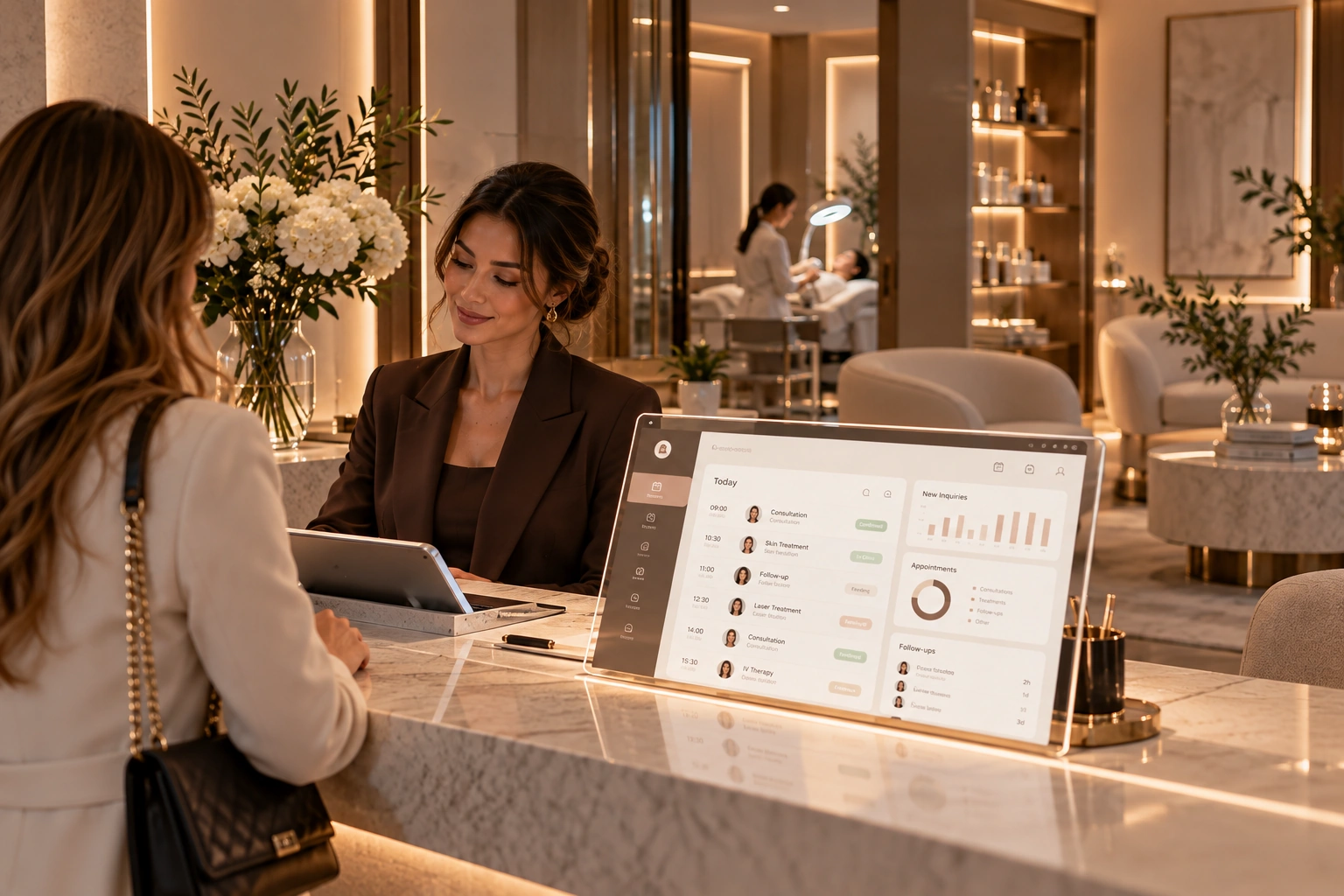 A more connected patient journey
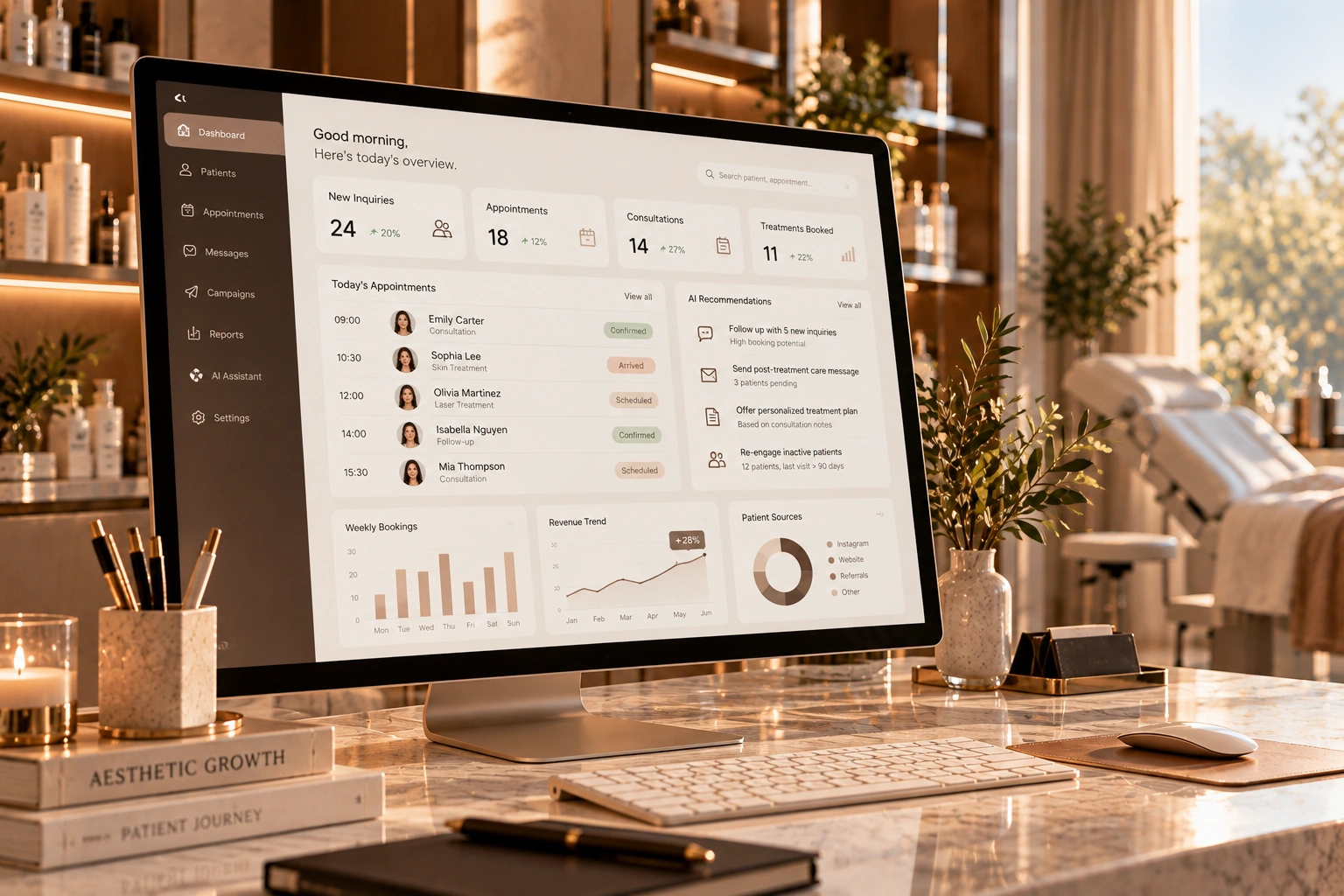 Technology with intention
Median online booking rate in the 2026 med spa benchmark. Consultation-led practices should interpret this metric in context.
Source: Zenoti, 2026 →Median reported staff utilization. Operational capacity and provider workflows matter alongside demand generation.
Source: Zenoti, 2026 →Annual revenue per location at the 90th-percentile benchmark — a measure of market scale, not of AI performance.
Source: Zenoti, 2026 →Independent industry benchmark data, not Mirèl client outcomes or evidence that AI causes the differences. Business results depend on the clinic's service mix, capacity, operating model and implementation.
A commercial perspective
A clinic can invest in ads, generate qualified interest and still lose opportunities when a call goes unanswered, a booking isn't completed, or follow-up becomes inconsistent. Adding another software subscription does not solve a disconnected process.
Mirèl's role is to diagnose the constraint first, then consider whether better workflows, ordinary automation, AI assistance or human training are the most sensible response.
The prospect is interested, but the next step takes too long.
Questions remain unanswered, ownership is unclear or scheduling takes effort.
Confirmations, staff handoffs and permitted reminders are inconsistent.
Suitable rebooking and retention opportunities disappear between visits.
Practical applications
The right workflow depends on your existing tools, staff, patient needs and data permissions. These are practical opportunities to evaluate — not a promise that every clinic needs every feature.
Support routine questions about hours, location, services and next steps with clinic-approved information. Medical or uncertain questions go to a qualified person.
Identify conversations that stalled, route leads to the right person and support permission-based follow-ups without repeating irrelevant messages.
Connect scheduling information, confirmations and administrative reminders where supported by the clinic's actual systems and communication permissions.
Help staff identify appropriate, consent-aware opportunities to reconnect with existing patients, without generating medical advice or treatment intervals.
Organize approved internal knowledge, routine task summaries and human handoffs so the team spends less effort navigating disconnected information.
Bring the commercial funnel into one view: qualified inquiries, bookings, visits, collected revenue and repeat business — with data quality checks.
Not every capability requires generative AI. In many clinics, simpler rules-based automation or clearer staff ownership may solve the problem at lower cost and risk.
See our five growth capabilitiesAn illustrative workflow
Imagine a prospective patient submitting a question outside reception hours. The goal isn't a conversation with a robot for its own sake. It's a useful response, an accurate handoff and a next step the clinic can stand behind.
Example only. This is a proposed design pattern, not a claim of a live Mirèl deployment. Actual implementation requires integration checks, consent, vendor review and staff approval.
A visitor contacts the clinic via an approved website form, messaging channel or telephone pathway.
Routine, nonclinical information is provided using an approved knowledge base. Urgent, sensitive or uncertain requests are escalated.
The visitor receives accurate consultation instructions or access to actual scheduling options, if the clinic supports integration.
Responsible staff receive the appropriate handoff. Confirmations and legally permitted reminders support the appointment.
Review response time, booking completion, attendance, exceptions and operating cost against the original baseline.
The investment decision
For an established med spa, the question is not “Can this be automated?” It is “Will improving this workflow produce meaningful value, with acceptable cost and risk?”
Start with missed demand, delays, abandoned consultations or retention gaps. Define the baseline before proposing a new tool.
Confirm integrations, data access, staff ownership, clinical escalation, vendor contracts and communication permissions.
Compare incremental contribution and capacity benefits with platform fees, setup, monitoring, errors and ongoing operating costs.
Our commercial standard: AI adoption should be evaluated through booked and attended consultations, collected revenue, retention and net contribution — not chatbot message counts or automated actions alone. Any improvement must be validated rather than assumed.
Implementation methodology
An intelligent workflow should be designed around the clinic's business and tested with its team. The path is deliberate, from first diagnosis to monitored operation.
Review the journey, workload, missed handoffs, existing tools and baseline metrics.
Choose a contained, meaningful use case with a clear owner and benefit hypothesis.
Specify approved content, integrations, permissions, exception rules and human review.
Test accuracy, security, escalation, staff usability and failure cases before launch.
Track the KPIs and real cost, monitor issues and refine what proves valuable.
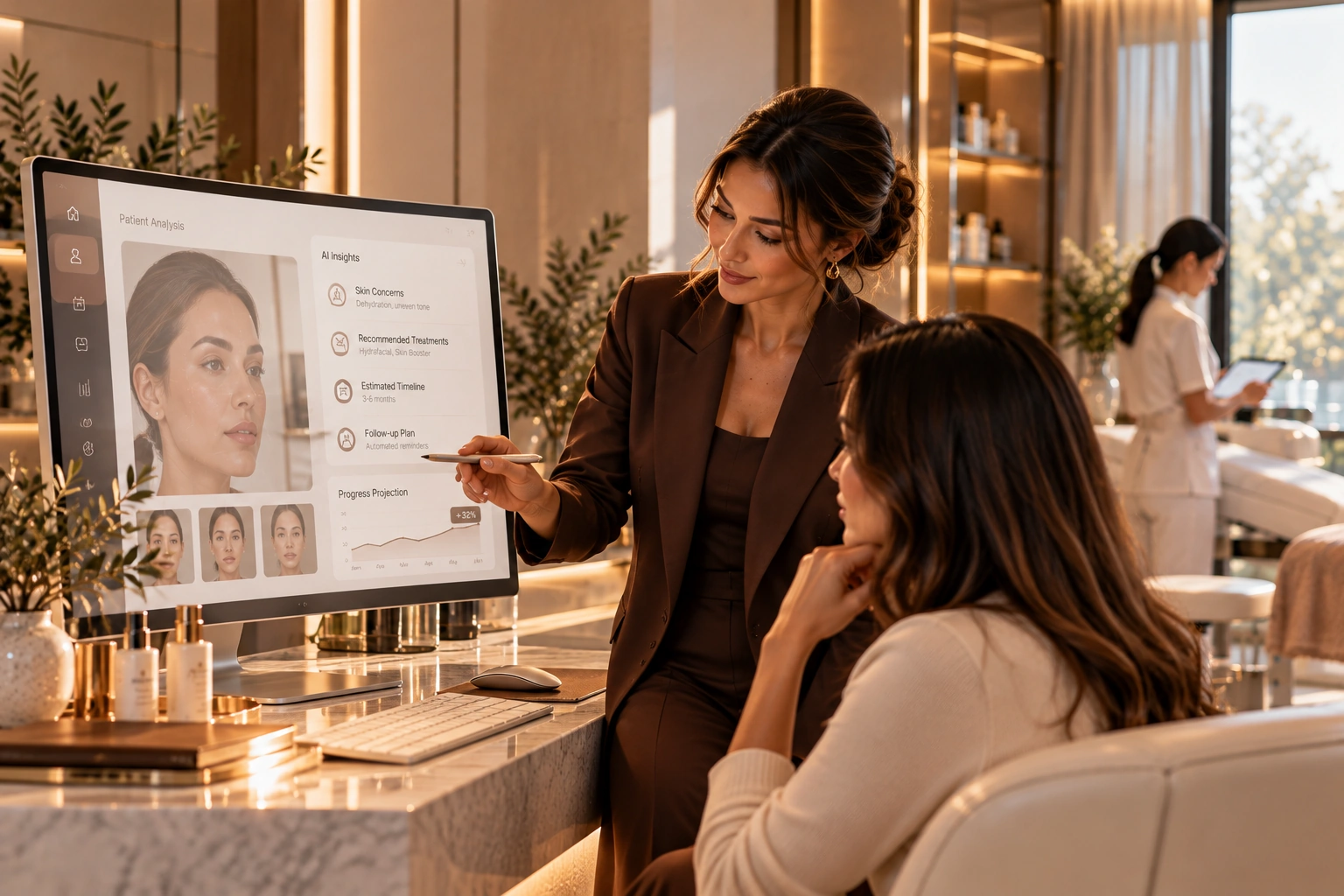
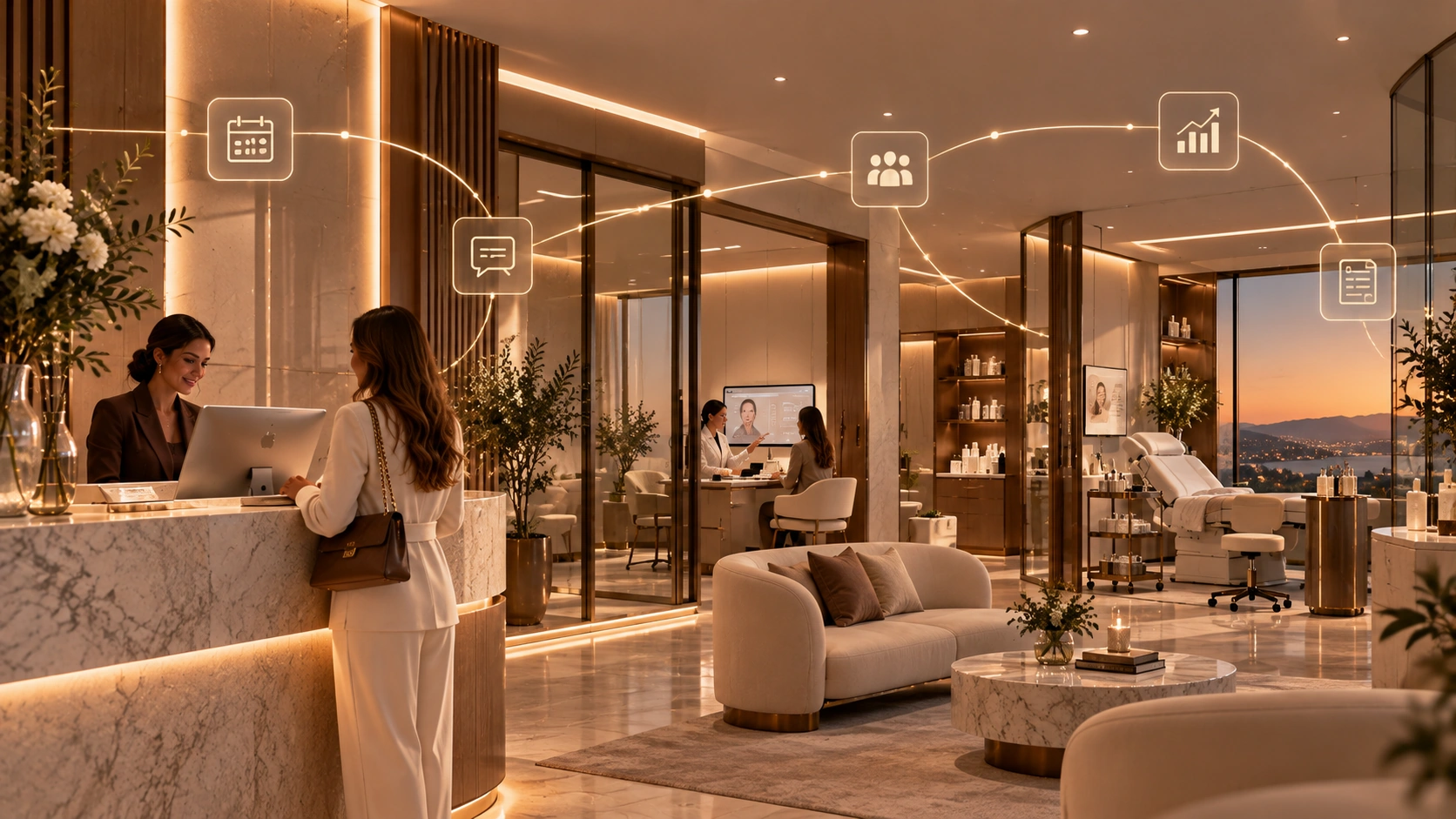

Responsibility before convenience
Medical aesthetics combines commercial operations with sensitive decisions. Technology must respect that boundary — and the particular rules that apply to each clinic.
A vendor's “HIPAA-ready” label or a generic automation template is not a substitute for the clinic's own compliance assessment. Rules vary by jurisdiction, provider status, use case and data flow.
Research & operating guidance
These sources help frame the opportunity, limitations and responsibilities of AI in med spas. They do not endorse Mirèl, describe our client results or guarantee an improvement.
Revenue, booking and staff-utilization benchmarks, with the important context that med spa booking is often consultation-led.
Read the reportNIST's voluntary framework sets out govern, map, measure and manage functions for responsible AI risk management.
Explore NIST guidanceThe FDA's list of AI-enabled medical devices illustrates why clinical technologies require different oversight from marketing and administrative workflows.
Explore FDA informationHHS discusses business associate agreements, security assessment and vendor responsibilities when protected health information is involved.
Read cloud guidanceOfficial guidance on electronic marketing consent, communication types and the distinction between marketing to people and businesses.
Explore ICO guidanceACMA explains key consent, sender-identification and unsubscribe requirements for commercial electronic messages in Australia.
Explore ACMA guidanceFor business education only; not medical, regulatory or legal advice. Requirements and product capabilities must be verified for the specific clinic, vendor and jurisdiction.
Questions worth asking
A well-run medical aesthetics business should understand the costs, responsibilities and success criteria of a proposed workflow before approving its deployment.
No. If the real problem is scheduling, staffing coverage or inconsistent follow-up, simpler technology or better process ownership may be the more effective investment. We assess the constraint first.
Possibly. Compatibility depends on the vendor, integrations, permitted data fields, scheduling access, security requirements and contractual restrictions. Each proposed connection needs verification before it is sold as an available feature.
The objective is to support your team, not to remove human care. Routine administrative steps may be assisted by AI, while empathetic conversations, exceptions and all clinical judgment retain a clear human owner.
No. Applicability depends on the business and data involved. When HIPAA applies, the clinic and relevant vendors must evaluate required agreements, technical safeguards and each party's responsibilities. Other privacy and communications rules may also apply.
Start with baseline metrics. Consider changes in response speed, eligible appointment bookings, attendance, administrative workload, error frequency and incremental financial contribution after platform and operating costs. Evaluate the actual data rather than assuming causation.
Rules-based automation follows defined instructions, such as sending an authorized appointment reminder. AI can interpret or draft information within approved boundaries. Many useful workflows need only conventional automation, while some benefit from both.
It is one of our five connected growth capabilities. The appropriate scope is determined after reviewing the clinic's acquisition, conversion, team workflows, retention, data and priorities. We do not prescribe an AI feature just to make a proposal appear more advanced.
A considered next step
Let's examine how inquiries become consultations, paying patients and returning relationships — and where an appropriately designed workflow could be worth testing.
A discovery conversation, not a claim of a completed implementation or a guarantee of financial results.